Welocome to Contact Kican

Welocome to Contact Kican
Blog
Hydraulic Cylinder Bore, Stroke, and Pressure: How to Specify Custom Requirements
When I first delved into the world of hydraulic systems, I realized that understanding the specifications of hydraulic cylinders—namely bore, stroke, and pressure—was crucial for anyone looking to customize hydraulic solutions for their business. If you\'re seeking to define custom requirements for a hydraulic cylinder effectively, this article provides you with clear, actionable steps to get it right the first time.
The process begins with a deep understanding of your operational needs. Here’s how to specify your custom hydraulic cylinder requirements with precision.
The bore of a hydraulic cylinder directly influences its strength and the volume of fluid it can accommodate.
Action: First, analyze the load that your application will exert. This involves assessing both static and dynamic forces.
Evidence: For instance, if you require a cylinder capable of lifting loads up to 5000 lbs, calculating the required bore size using the following formula will help ensure accuracy:
[ \\text{Bore area (in square inches)} = \\frac{\\text{Force (lbs)}}{\\text{Pressure (psi)}} ]
Practical Application: For a hydraulic pressure of 2000 psi, you need a bore area of at least 2.5 sq inches, leading you to a bore diameter of approximately 2 inches when rounded off appropriately.
The stroke length dictates the distance over which your hydraulic cylinder operates, impacting the reach of your application.
This careful calculation ensures that your cylinder will not only achieve desired positions but also improve efficiency in tasks.
Pressure plays an integral role in the performance and lifespan of hydraulic cylinders.
Throughout this process, challenges may arise, such as unacceptable tolerances or incompatible materials.
Improving your execution efficiency involves leveraging the right resources:
To ensure the successful specification of a custom hydraulic cylinder, follow these clear steps:
By following these actionable steps, you’ll be on your way to efficiently specifying your custom hydraulic cylinder requirements. I encourage you to start with KICAN—whose commitment to precision and quality can streamline your customization process. The benefits of doing this will not only lead to enhanced performance and efficiency in your operations but also significantly reduce downtime and associated costs.
Ready to enhance your hydraulic solutions with expertly tailored requirements? Take action today!
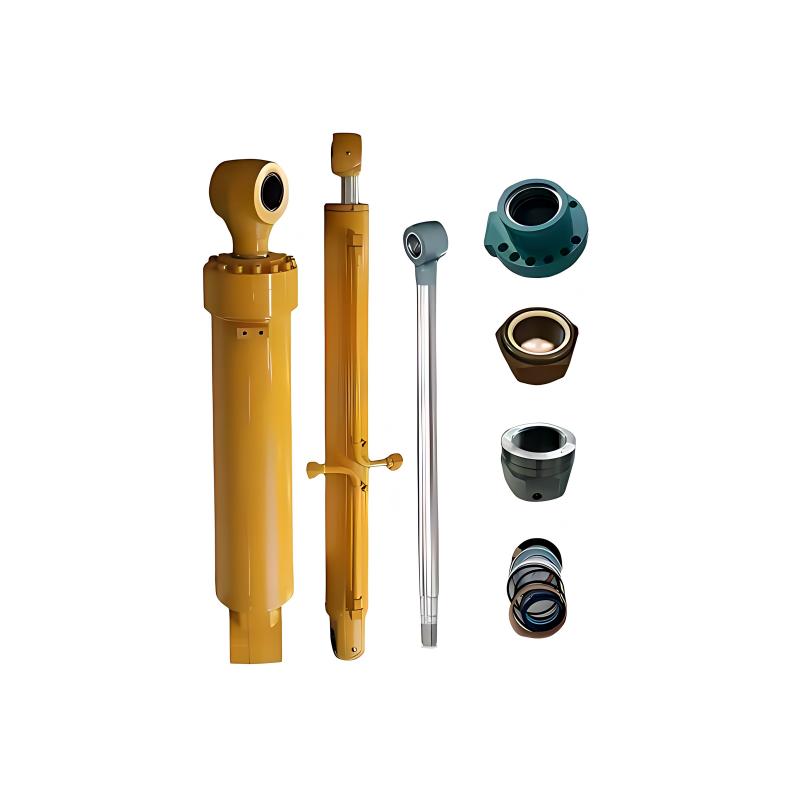
By leveraging the insights provided, along with KICAN\'s expertise, you will not only solve immediate challenges but also equip your business for long-term success with custom hydraulic cylinder solutions.


